
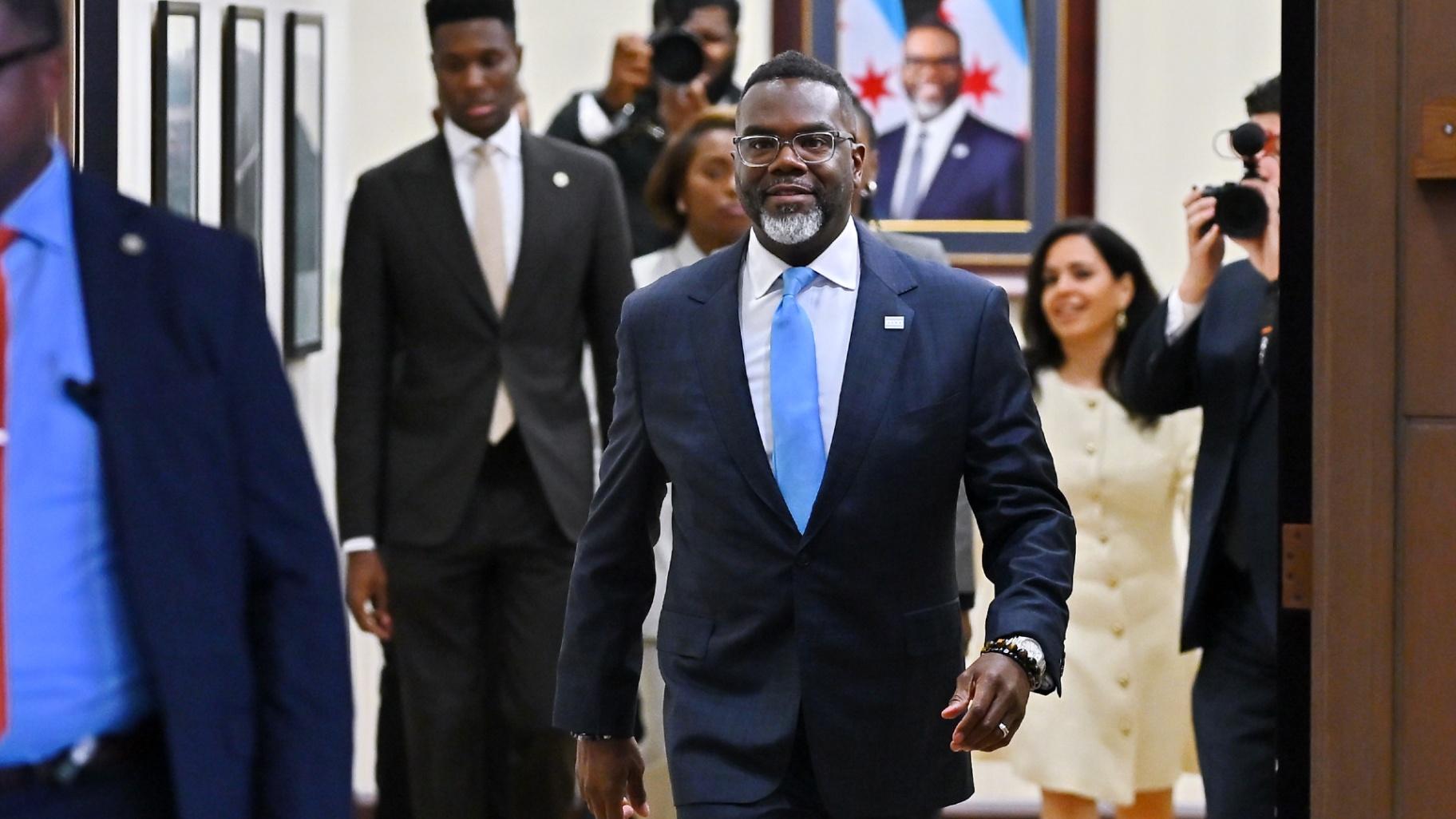
Mayor Brandon Johnson unveiled his proposed 2027 spending plan Wednesday, seeking to frame the debate over the $17.6 billion budget as a choice between the status quo that has left too many Chicagoans scrambling to make ends meet and enriching those who need it the least.
“We do not have to accept the way things are simply because that is the way they have always been,” said Johnson, who is running for reelection. “We know what happens when inequality deepens and we abandon our responsibilities to one another. And we should never accept the notion that asking those with the greatest means to pay their fair share will somehow come at the expense of economic growth.”
As Johnson stepped to the rostrum to deliver his fourth budget address, supporters chanted “four more years.”
For the second year in a row, the heart of Johnson’s spending plan would impose a so-called head tax — which was soundly rejected by the Chicago City Council a year ago — that would impose a $25 per month per employee tax on all firms with more than 125 employees.
That is projected to generate approximately $100 million — after exempting firms whose employees work in areas of the city designated by the federal government to be “socioeconomically disadvantaged areas,” which includes much of the city’s South and West sides.
That could encourage businesses to relocate to areas of the city that have long suffered from disinvestment and have few large employers, Johnson said.
“There is no reason to coddle or feel sorry for corporations,” Johnson said in one of only a few unscripted lines, prompting applause from his allies, but silence from most alderpeople. “They are doing just fine.”
Johnson’s plan also proposes to hike personal property lease taxes from 15% to 20% to generate $234 million. That tax, which gets added to car and equipment rentals as well as cloud-based software, will ensure that “big tech” firms pay their fair share, Johnson said.
In addition, Johnson proposed adding a 15-cent fee to every package delivered in Chicago that does not contain medicine or take-out food to generate $9 million. That is the same charge assessed to Chicagoans who do not bring reusable bags to carry home their groceries to offset the cost of those bags ending up in the city’s trash, Johnson said.
State law prevents the City Council from levying a tax on deliveries in Chicago, but the city has the power to regulate waste — and encourage people to shop local, Johnson said.
The city’s tax on online betting would rise by 20% to generate $37 million, according to Johnson’s proposal. An additional $18 million will come from the expanded use of automated cameras to ticket drivers who block bicycle and bus lanes, according to the proposal.
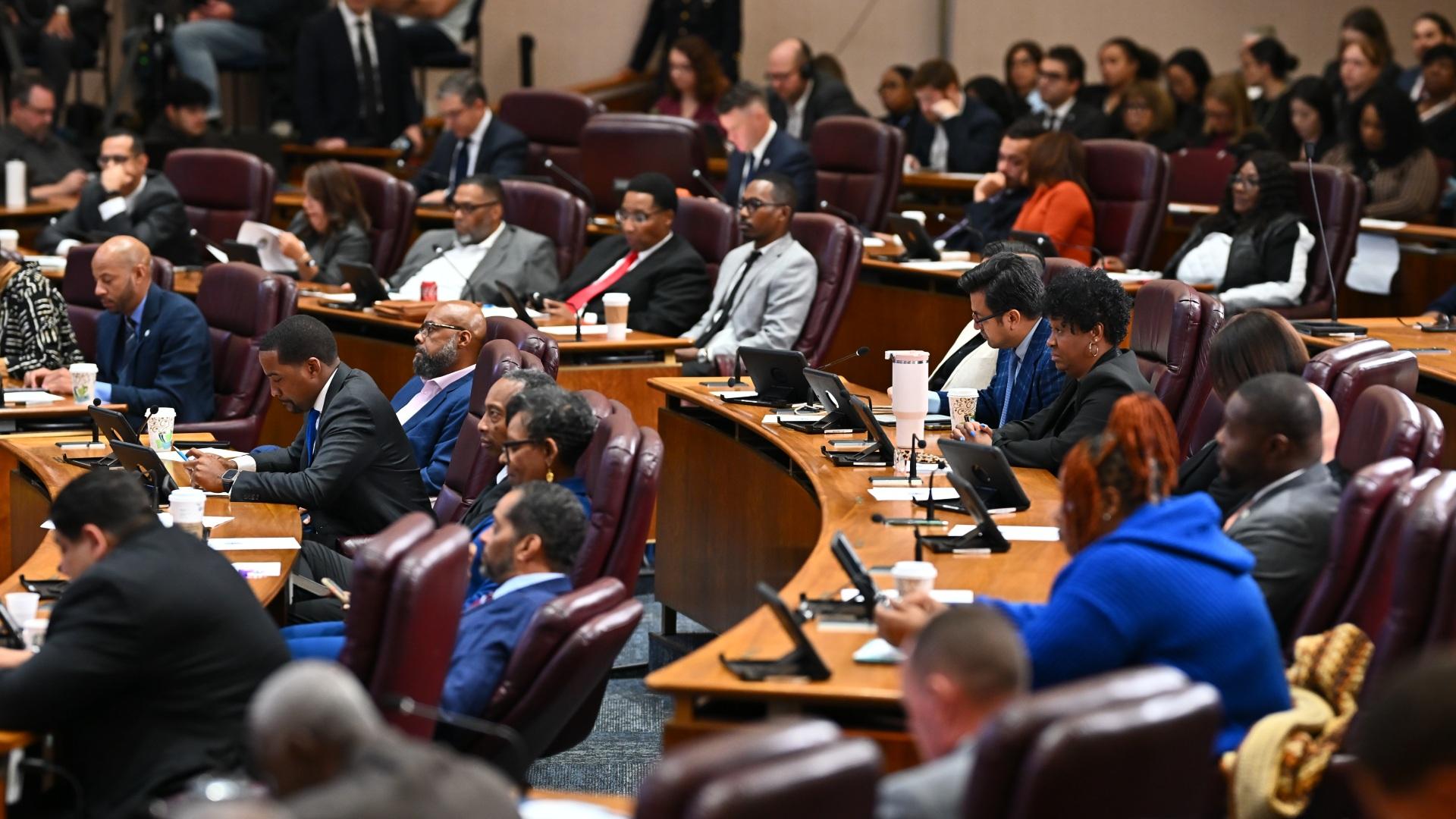
Members of the Chicago City Council who rejected the mayor’s attempt to impose a similar tax a year ago said they would fight his latest proposal to levy a per-employee tax on large firms, calling it “job killer” that was “dead on arrival.”
“The mayor did not learn from last year,” Ald. Brendan Reilly (42nd Ward) said, who dismissed the mayor’s budget address as a “nice campaign speech.”
Other alderpeople said they would not vote to increase the lease tax again, warning that it would hurt regular Chicagoans and drive businesses out of Chicago.
But when pressed by WTTW News, Ald. Nicole Lee (11th Ward), could not offer an alternative way to generate the same amount of new revenue.
The only other tax that the City Council has the power to raise without the approval of state lawmakers that could generate hundreds of millions of dollars is the property tax, and no elected official wants to propose such a hike just a few months before facing voters.
Several City Council members said they were shocked by Johnson’s proposal to borrow $481 million to cover the soaring cost of lawsuits alleging Chicago police officers committed a wide range of misconduct — including wrongful convictions and improper pursuits.
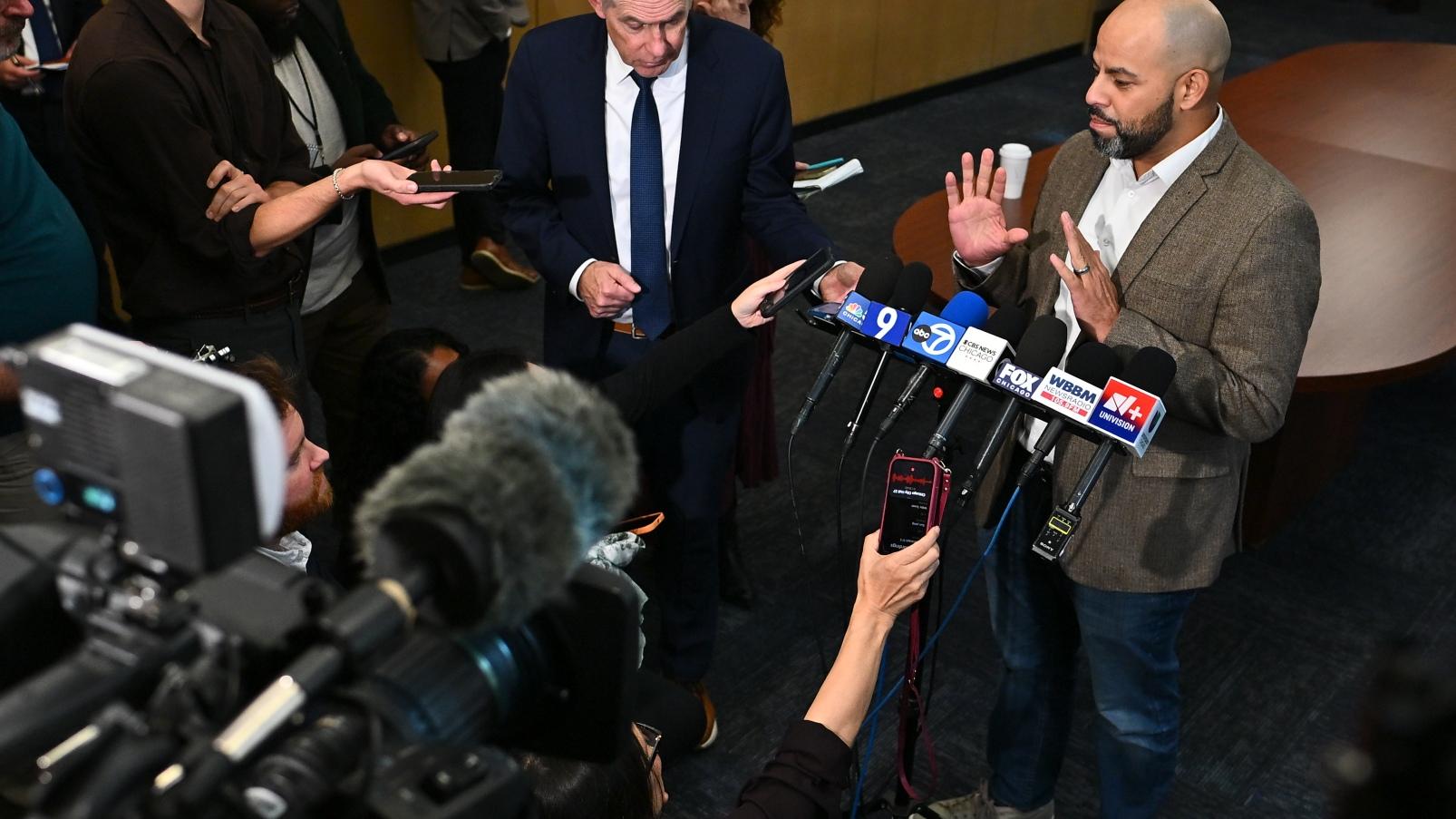
Ald. Andre Vasquez (40th Ward), a member of the Progressive Caucus who has not hesitated to criticize the mayor, said he would scrutinize how much it would cost the city in interest before deciding whether to vote for the plan.
The borrowing proposed by Johnson would cover the $260.8 million the City Council agreed to pay to 17 men who spent more than 383 years in prison after they were coerced into confessing to crimes by disgraced former Chicago police Detective Reynaldo Guevara. Those settlements will be paid in four installments in 2027 and 2028.
In addition, it would cover $120 million that the city is already obligated to pay and an additional $100 million to cover future costs, Chief Financial Officer Ashlee Gabrysch said.
That borrowing will be paid off between five and seven years, Gabrysch said.
As recently as September, Johnson told reporters the city would not borrow to cover those costs, and blamed the Chicago Police Department’s decades of scandals, misconduct and brutality for swelling the deficit to $882.4 million.
By deciding to borrow to cover the cost of resolving those lawsuits, Johnson’s team only had to close a gap of $652.5 million, acting Budget Director Jonathan Ernst told reporters Tuesday.
The spending plan sets aside an additional $132 million to resolve police misconduct lawsuits, Gabrysch said.
In 2026, Chicago borrowed $267 million to cover the cost of police misconduct lawsuits, making Johnson’s proposal the second in a row that would add to the city’s already massive debt to cover operational costs.
Johnson briefly defended the plan during his approximately 45-minute speech, which was interrupted several times by members of the public in the gallery and applause by the City Council.
“Investing in our residents means recognizing there are individuals and families who are still suffering from harms of the past,” Johnson said. “Delaying these cases prolongs suffering for families-and passes ever-growing legal expenses on to future generations of Chicagoans. By making timely settlements now, we can give resolution to those for whom it has long been delayed while also shielding taxpayers from the rising costs of expensive litigation that could otherwise go on for many years.”
Alderpeople across the ideological spectrum vowed to scrutinize the programs that Johnson wants to expand or add as part of the budget, which must be approved by the end of the year.
Johnson’s budget includes $131.5 million in new spending, including enough money to reopen another mental health clinic closed by former Mayor Rahm Emanuel and expand the program that sends social workers and counselors to those experiencing a mental health crisis rather than police officers.
In addition, Johnson wants to spend $24 million to add 7,000 youth jobs — both major campaign promises from Johnson during the 2023 campaign.
The mayor also wants to spend an additional $15 million on homelessness services, $13 million in rental assistance and $2 million on a program designed to care for those experiencing homelessness.
The number of Chicagoans living in city shelters or on city streets dropped 12% between January 2025 and January 2026 but remains near an all-time high, according to the annual survey used by federal officials to track homelessness.
An additional $30.9 million would be earmarked for Chicago’s libraries and $7 million would be used to expand an early childcare program, according to the proposal.
Another $7 million would be used to expand the city’s violence prevention programs and add 390 outreach workers. In all, Johnson wants to spend approximately $41 million on those efforts, which he credits with reducing Chicago’s homicide rate to a 60-year low.
The mayor also proposed expanding the budget for the Department of Streets and Sanitation to add 20 new crews to clear vacant lots of trash and debris and trim 15,000 extra trees annually and 28 new crews devoted to rodent control.
Johnson will ask the City Council to declare approximately $520 million in property taxes earmarked to fight blight to be “surplus,” $180 million more than officials expected in September.
With the City Council’s approval, approximately $286 million will flow to Chicago Public Schools, with the rest going back to other taxing agencies, according to the forecast.
The CPS budget approved by the Chicago Board of Education for the 2026-27 academic year counted on getting $285 million in surplus TIF funds from the city.
Ald. Anthony Beale (9th Ward) accused Johnson of “bailing out CPS.”
CPS’ budget also relies on $150 million in state funding that is not guaranteed and has yet to materialize, records show.
The city faces a pension bill of more than $2.94 billion in 2027 in order to comply with a state law that requires two of Chicago’s pension funds be funded at a 90% level by 2055 and the other two by 2058, ensuring they can pay benefits to employees as they retire, according to the most recent budget forecast.
That is $90.5 million more than last year, records show.
In addition, the spending plan earmarks $364 million for its pension funds in 2027 to chip away at the debt that has been accumulating during the past 20 years.
That additional pension payment includes the $75 million that the new owners of the city’s parking meters agreed to pay the city once the deal closes. Some alderpeople suggested that windfall should be on top of the $364 million additional pension payment that Johnson had already promised to make before several members of the City Council negotiated the deal.
Johnson explicitly cast his budget as the continuation of former Mayor Harold Washington’s legacy, cut short by his death in 1987 after he won a second term.
“Following Mayor Washington’s untimely death, our city reverted to prioritizing corporate profits and measuring success by number of cranes in the Loop — forgetting that the success of our city cannot be measured in one neighborhood,” Johnson said. “Our success must be measured by the presence of investment in every part of Chicago, addressing every need.”
In 1986, Washington dubbed his proposed spending plan the “fair share” budget. Johnson, the second Black man to be elected Chicago mayor, often likens the implacable opposition he has faced from the City Council to the revolt that confronted Washington before he won a second term in office.
It is unclear how Johnson plans to convince the City Council to impose a head tax after a nearly veto-proof majority of members refused to do so less than 12 months ago, a period in which his relations with a majority of alderpeople have only soured. Johnson allowed the city’s 2026 spending plan to take effect without his signature.
When he announced his bid for a second term, Johnson said the mayoral contest would pit the “corporate class” and billionaires against the “working class” — and that he was proud to fight on the side of Chicago residents struggling to make ends meet at a time when everything from rent and gas to healthcare and groceries are growing more expensive by the day.
“Let us plant the seeds of a fair Chicago,” Johnson said, his voice rising in a cadence familiar to everyone who has ever attended a Black church in Chicago. “We do not have to accept the way things are simply because that is the way they have always been. We know what happens when inequality deepens and we abandon our responsibilities to one another. And we should never accept the notion that asking those with the greatest means to pay their fair share will somehow come at the expense of economic growth.”
Contact Heather Cherone: @HeatherCherone | (773) 569-1863 | hcherone@wttw.com


